
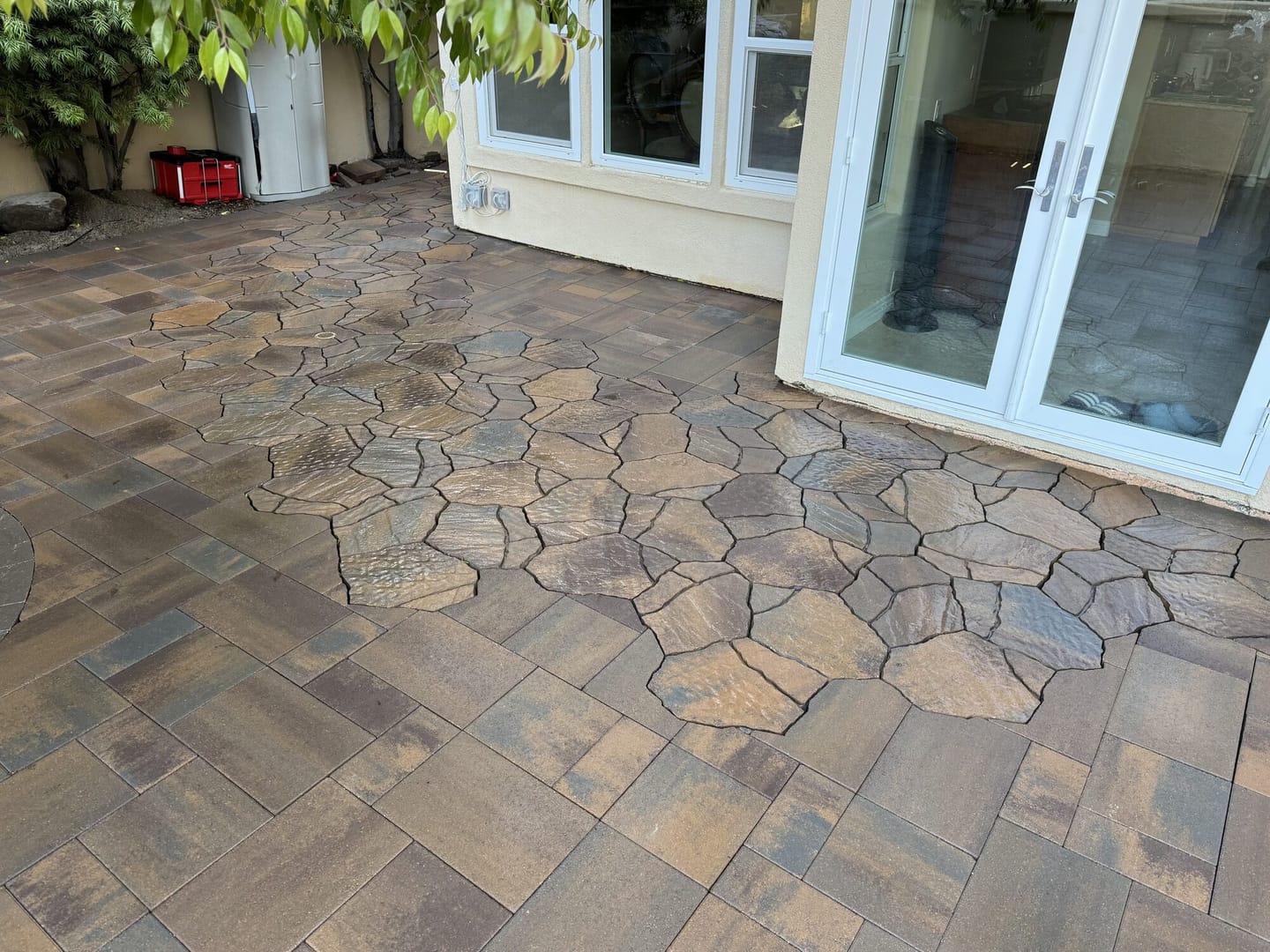
Paver patios, driveways and pool decks
Patios, driveways, walkways and pool decks set on a compacted base so the field stays flat.
Pavers, in detail.
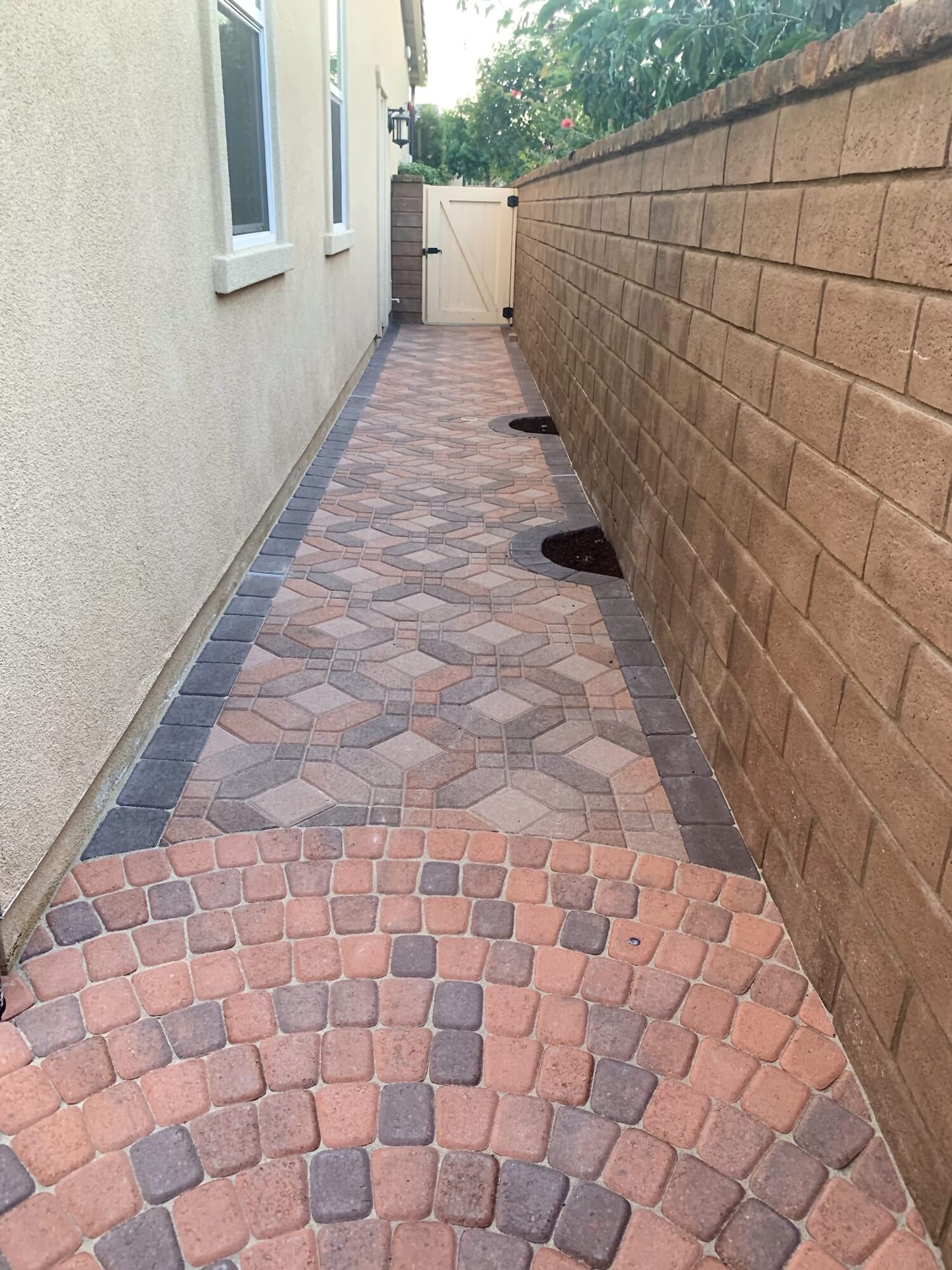
Pavers are most of what we build. A patio off the back door, a driveway that has to carry a truck every day, a pool deck, a side yard path that finally makes that strip of dirt worth walking on. The part you look at is the stone. The part that decides how it looks in ten years is underneath it. We dig to the depth the soil and the load call for, compact the subgrade, bring the base up in lifts and compact each lift, screed the bedding layer flat, then set and cut the field tight. Edges are restrained so the stone cannot creep sideways, joints are swept and compacted, and the whole surface goes under the plate again before we leave. We lay running bond, herringbone, ashlar and random patterns, circle kits and fans, soldier and double soldier borders.
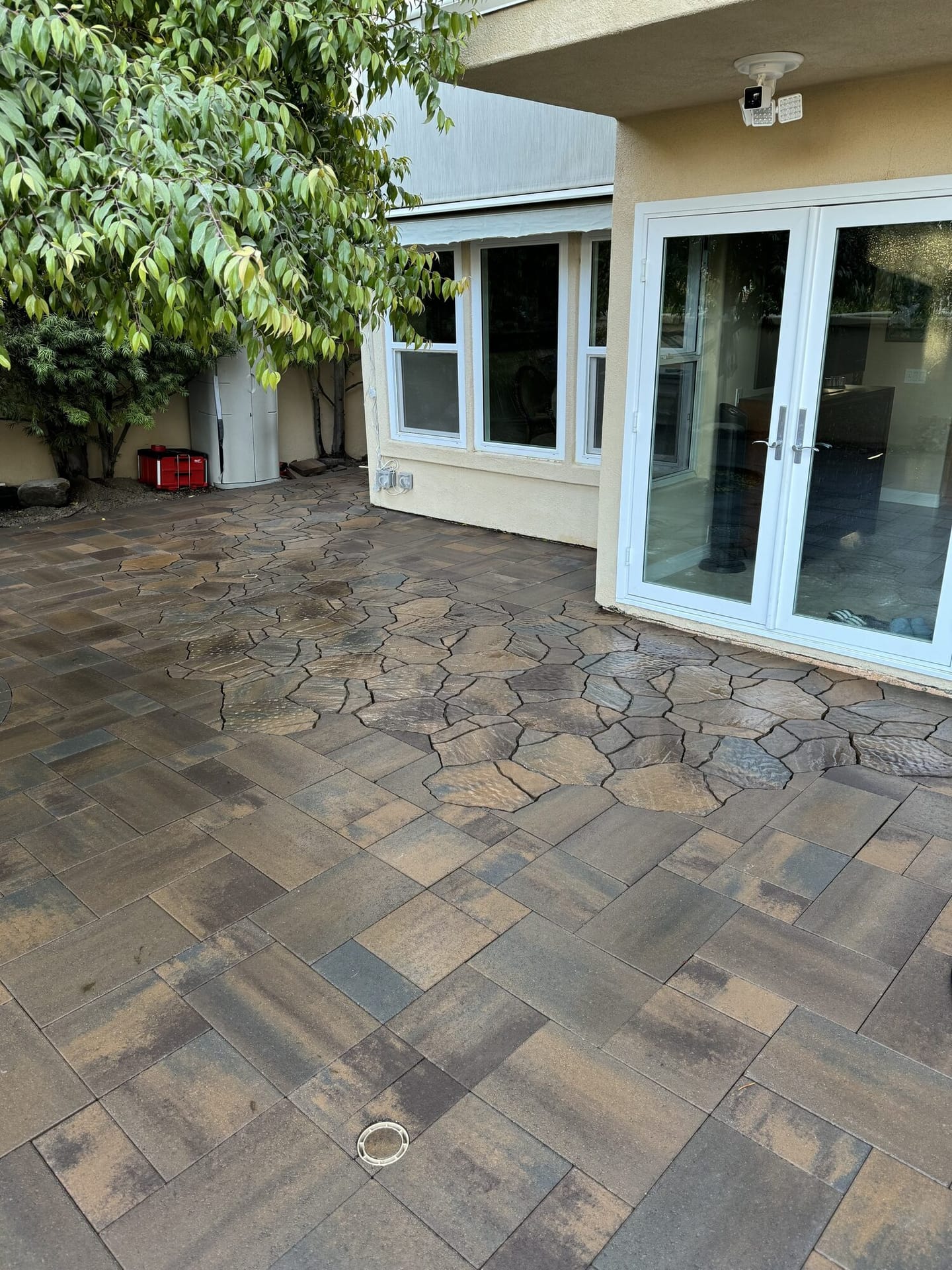
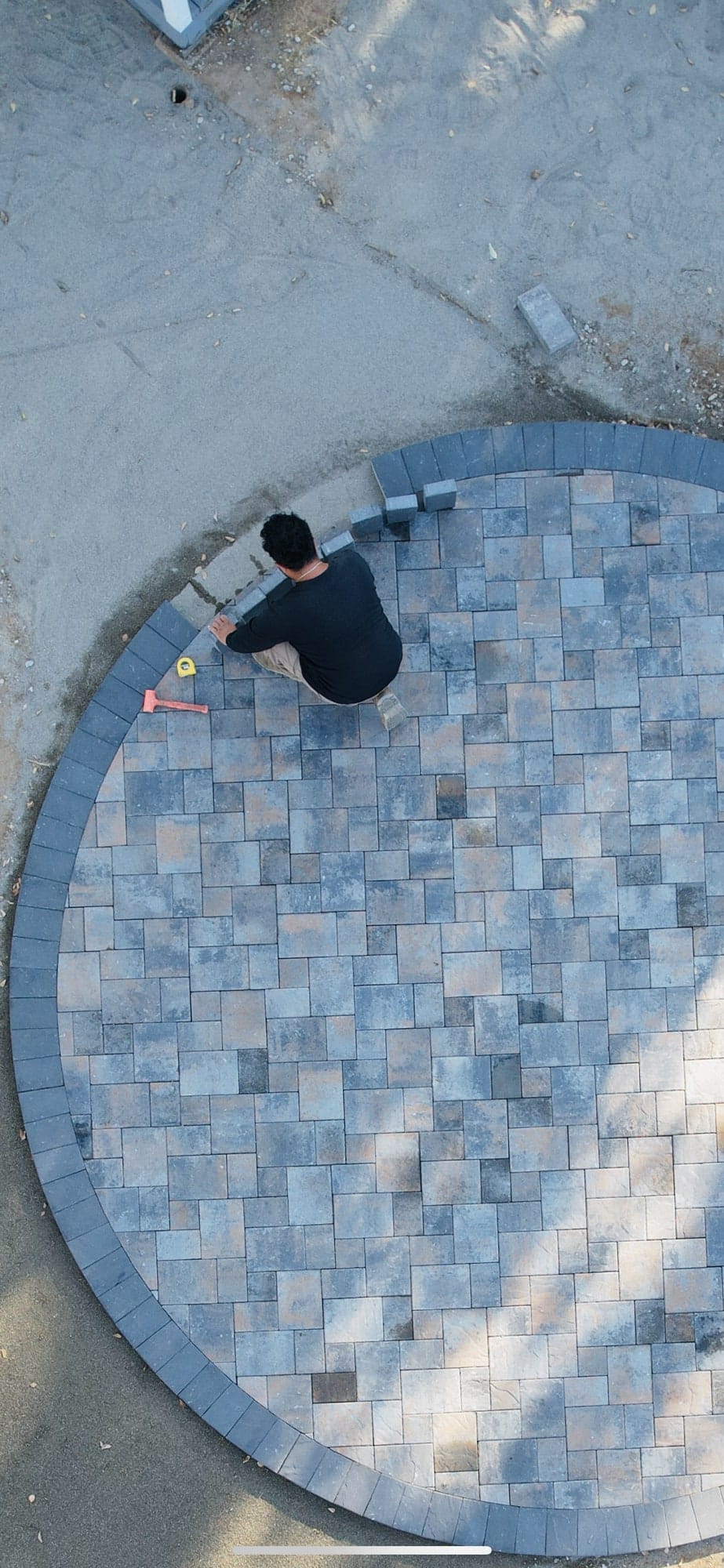
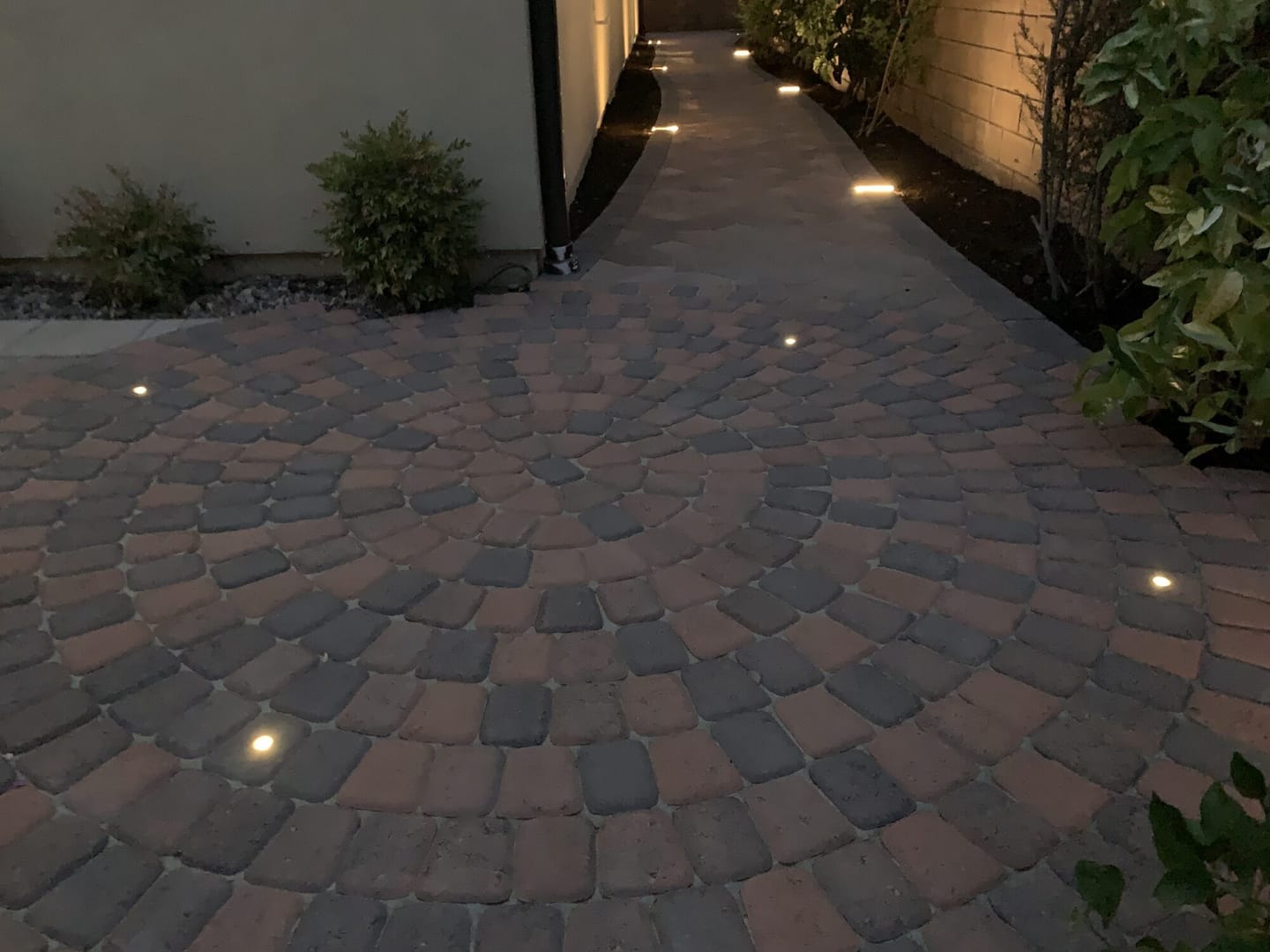
Watch it go in.
What happens between the old surface coming out and the finished job, with the layers you never get to see.
- 01 Break the old slab out
- 02 Compacted base, in lifts
- 03 Bedding layer screeded
- 04 Pavers set, cut and swept
What is in it.
Everything below is part of the pavers work, not an extra line on the invoice.
- Patios, walkways, driveways, pool decks and side yards
- Excavation, compacted base and screeded bedding sand, sized for the load
- Cutting, edge restraint, joint sand and a final plate compaction
- Borders, banding, soldier courses and circle or fan patterns
- Steps, seat walls and raised landings in matching stone
How it runs.
- Walk the yardWe measure, watch where water runs across the site, and look at patterns and colors in daylight with you.
- Quote and scheduleA written quote, then a start date. You hear from us before the crew shows up.
- Demo and baseOld surface out, subgrade compacted, base in lifts, drainage set before a single paver is laid.
- Set the stoneBedding screeded, field laid, borders cut in, joints swept and the surface compacted.
- Clean and walk itWe haul the debris, wash down the stone and walk the finished job with you before we pull off.
Questions about pavers.
Do pavers crack the way concrete does?
A paver field is thousands of small pieces with sand joints, so it moves with the ground instead of cracking across it. If a section ever settles, those pavers can be lifted and reset without touching the rest of the yard.
Can you match pavers I already have?
Sometimes. Send a photo or hand us a spare piece and we will tell you straight whether it is a match, a near match that will read as a repair, or a reason to redo the whole field.
How long does a paver job take?
It depends on the size, the access for machines and how much demolition is in front of it. We put the schedule in the written quote so you know before anything is torn out.
Thinking about pavers?
Tell us roughly what is there now and what you want instead. We come out, measure it and put a written quote together.
- Call or text(949) 257-7783
- Emailbtlandscape22@gmail.com
- Where we workServing Orange County, from San Clemente to Newport Beach
Got it.
Thanks for sending that over. We will call you back about the walkthrough. If you would rather talk now, we are on (949) 257-7783.